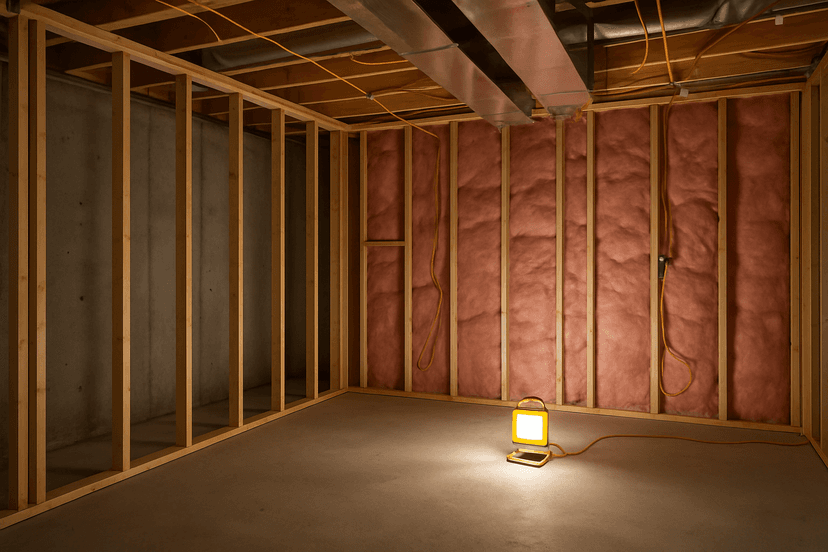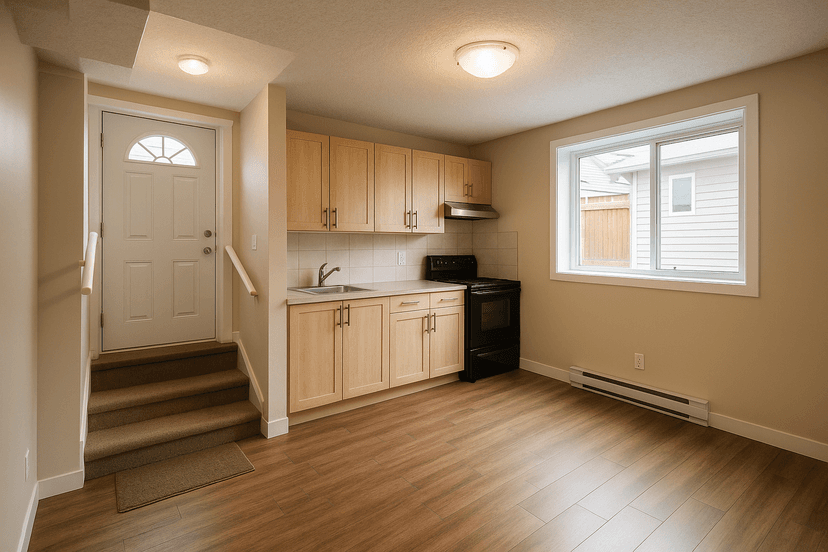
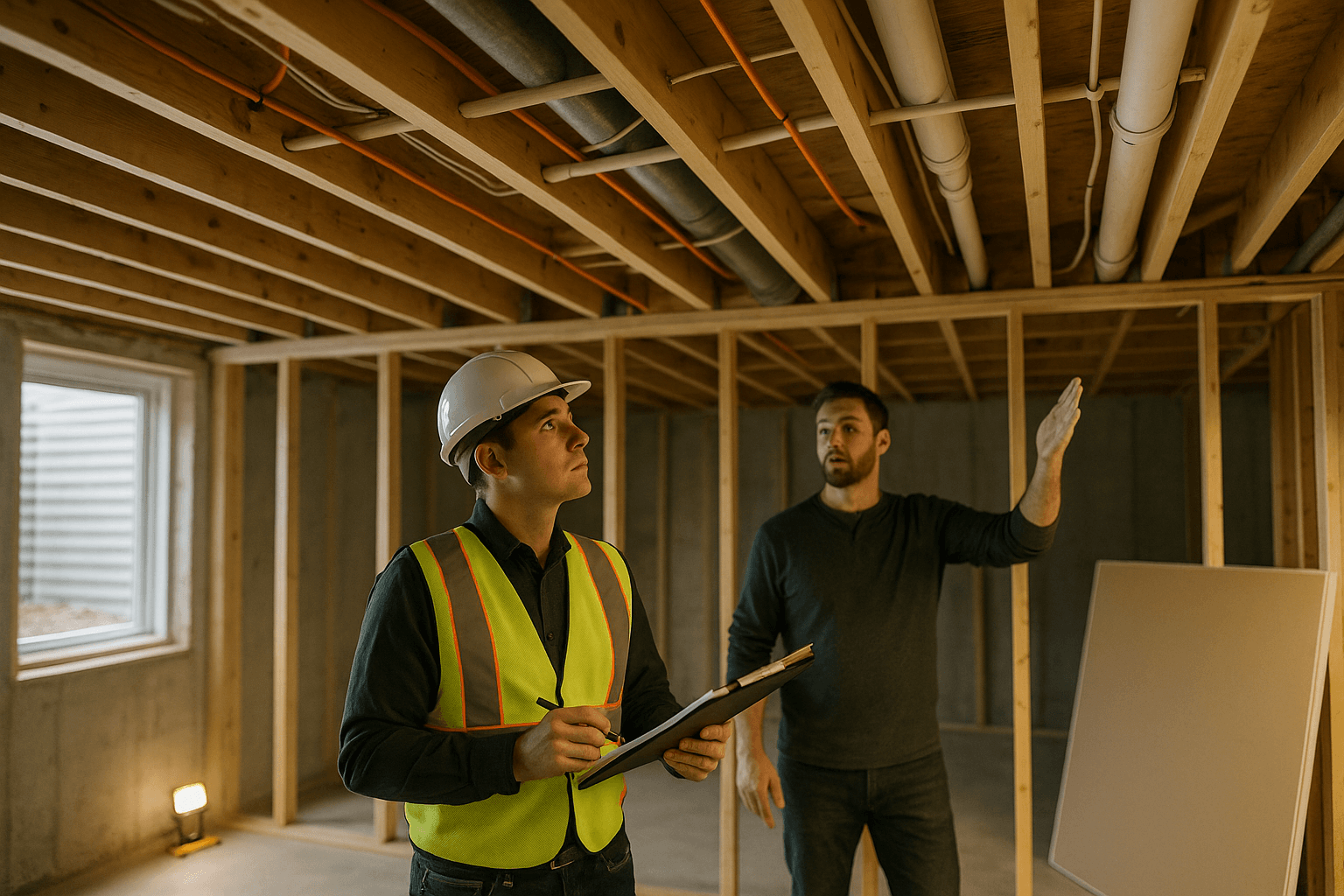
You need a building permit to finish a basement in Toronto if the work includes structural or material alterations, installs or modifies heating or plumbing, excavates or constructs foundations, underpins the basement, builds a basement entrance, or adds a second suite. Toronto exempts a basement finish that does none of those.
Here is the sentence that should decide who you hire. The City of Toronto writes: "As the homeowner, you are responsible for paying these fees or penalties yourself even if you have hired a contractor who assured you that permits were not needed." So when a contractor waves the question away, the risk does not transfer to him with the handshake — it stays with you, on your title, and it surfaces years later when a buyer's lawyer asks for the permit or an insurer asks how the wiring got behind that wall. The finished drywall is the cheap part. Taking it back off to show an inspector what is behind it is not.
• Toronto lists six basement triggers: structural or material alterations, installing or modifying heating and or plumbing systems, excavating and/or constructing foundations, basement underpinning, constructing a basement entrance, and adding a second suite.
• The exemption applies only where all three hold: no structural or material alterations, no additional dwelling unit created, and no new plumbing installed.
• A basement apartment always needs a permit — it is named in the trigger list.
• Permit fees start at a minimum of $214.79 and are charged per square metre above that.
• Building without one adds a fee of 50% of the permit cost, and all work must stop while the application is processed.
• Electrical is a separate filing with the Electrical Safety Authority, and must be inspected before it is covered.
When does finishing a basement in Toronto need a building permit?
The City of Toronto lists finishing a basement as permit-triggering work "if the work proposed includes any of the following", and then names six items: structural or material alterations, installing or modifying heating and or plumbing systems, excavating and/or constructing foundations, basement underpinning, constructing a basement entrance, and adding a second suite. The word "any" carries the weight — one item is enough, and a basement job that touches none of the six is unusual once a bathroom, a wet bar or a bedroom enters the drawing.
The City defines structural or material alterations separately, and the definition reaches further than homeowners expect. Adding or removing walls counts, described by the City as "changing room sizes and/or uses". So does creating "new windows or doors where there were none before", and so does "enlarging or relocating existing windows or doors" — which is exactly what cutting a basement window into a code-compliant escape opening does.
When does finishing a basement in Toronto not need a permit?
The City publishes a matching exemption, and it is a three-part test joined by "and", not a menu. Finishing a basement of a house needs no building permit if the work does not include structural or material alterations, no additional dwelling unit is created, and the work does not include the installation of new plumbing. All three have to be true at once.
The table below sets out how common Toronto basement jobs fall on either side of that test, using the City of Toronto's own permit and exemption lists.
Read the two plumbing rows together, because the pair is where a basement job quietly crosses the line. Swapping a tired vanity tap is repairing and replacing a plumbing fixture and stays exempt. Running new drain and supply lines to a basement bathroom that never had one is installing plumbing, and the permit is required from that moment on.
Does a basement apartment in Toronto need a building permit?
A basement apartment in Toronto needs a building permit. The City names "adding a second suite" directly in its basement trigger list, and the basement-finishing exemption separately fails the moment an additional dwelling unit is created. Toronto runs a dedicated Secondary Suites permit guide, which describes a secondary suite as an interior alteration adding a second dwelling unit smaller in area than the primary unit, in an existing detached house, semi-detached house or townhouse, and notes that "A common example of a secondary suite is a basement apartment."
A change of use is its own separate trigger, and the City is blunt about how far it reaches: "Even if no construction is proposed, if a change of use is proposed a building permit is required." Converting a single dwelling unit house to a multi-dwelling unit house is the City's own example. A homeowner who frames nothing, moves no plumbing and simply starts renting the existing basement as a separate unit has still proposed a change of use.
How much does a basement building permit cost in Toronto?
A Toronto building permit starts from $214.79. The City's fee schedule states that a "Minimum fee of $214.79 (2026) shall be charged for all work", and calculates everything above that floor by formula: "Permit fee = SI x A", where SI is the Service Index for the class of work and A is the floor area in square metres.
For a basement the relevant Service Index is the interior alterations line — "Interior alterations (partitions, finishings, etc.)" — charged at $11.53 per square metre for Group C residential occupancies, effective 1 January 2026. Creating a suite adds a Residential Unit Fee of $56.33 per unit, described by the City as applying to "Each new residential unit included in an application". Because the charge follows the floor area on your drawings, no single typical figure exists — the City publishes rates and a minimum, not a price for a basement.
What happens if you finish a Toronto basement without a permit?
The City publishes the consequences itself, and they are worse than a fine. Toronto lists a "work without permit" administrative fee "equal to 50 percent of the permit fees for the project"; a delay during which "All work must stop"; "Possibly having to undo the work that was done"; possibly having to do more work than originally planned and budgeted for; and "Possible legal and /or financial issues down the road, such as impacts on selling your property or making an insurance claim."
The City of Toronto: "As the homeowner, you are responsible for paying these fees or penalties yourself even if you have hired a contractor who assured you that permits were not needed."
The City's fee schedule prices the penalty for construction beginning before a permit is issued at 50% of permit or $214.79, whichever is greater, to a maximum of $29,456.99 per permit. A contractor's reassurance is not a defence, and it is not a transfer of liability.
Do you need an ESA permit for basement electrical work in Ontario?
Basement electrical work needs its own filing with the Electrical Safety Authority, separately from any City of Toronto building permit. The Electrical Safety Authority states that "The Ontario Electrical Safety Code (the Code) requires almost all electrical work be reported to the Electrical Safety Authority by filing a notification of work (or 'permit')", and that the person doing the work should file the notification before the work starts.
Two consequences follow for a basement. The first is timing: "An electrical installation must be inspected before it's concealed or buried", so the wiring has to be signed off before the drywall goes on. The second is who may hold the tools: "In Ontario, if you hire someone to do electrical work in your home, by law, it must be a Licensed Electrical Contractor (LEC)." The Authority adds a line worth using verbatim on your first call — "If you hire a general contractor, confirm that a Licensed Electrical Contractor will do the electrical work" — and notes that your contractor can supply the ESA Certificate of Acceptance for your insurance company, so ask for a copy.
How long does a Toronto basement permit take to get?
Toronto reviews a complete house-stream application within 10 business days, and an interior alteration to a Part 9 house may qualify for Express Services, where "Toronto Building's goal is to review eligible applications within 3 business days after the permit has been taken in". The City's eligible list for Express Services names both "Interior Alterations" and "Basement Walkouts and Underpinning". Note the City's own word is goal, not guarantee.
The clause that actually governs your calendar is the one about completeness: applications where no Zoning Applicable Law Certificate has been issued are considered incomplete, and the City states plainly that "There is no time frame for review of incomplete permit applications." A 10-day review is a 10-day review of a complete file. An application missing its zoning certificate has no published timeline at all, which is the real reason permit waits vary so much between neighbours.
Do other GTA municipalities have the same basement rules as Toronto?
Toronto's conditional exemption is not the GTA norm, and a homeowner who reads Toronto's rules and applies them in the 905 will get it wrong. Mississauga lists "Finishing a basement to create rooms or living space" as work requiring a permit, with no structural or plumbing qualifier attached. Oakville states that "If you plan to finish or renovate your basement for personal use, you will need a building permit."
So the same basement job — new framing avoided, no new plumbing, no second unit — can be exempt in Toronto and permit-requiring one municipality over. Check the rule for the municipality the house sits in, not the one the advice was written for.
Does no permit required mean no rules apply in Toronto?
A permit exemption in Toronto is not a general exemption from the rules. The City attaches two warnings to its own exemption list, and both matter to a basement project. The first is scope: the City states the list "is not exhaustive and judgment should be used depending on the situation and circumstances associated with the project". The second is zoning: "Even if a building permit is not required, compliance with the Zoning Bylaw is required."
Zoning governs what the space is allowed to be, while the building permit governs how it is built. A basement that satisfies every construction rule can still breach the Zoning Bylaw on use, and a homeowner told "no permit needed" has been answered on only one of the two questions. The City also states that as the building owner "you are ultimately responsible for complying with all building requirements".
How do you find a Toronto contractor who will pull the permit?
Ask three questions on the first call, before price. Who applies for the permit, and in whose name? Will a Licensed Electrical Contractor do the electrical work and file the ESA notification? And will you hand over the ESA Certificate of Acceptance at the end? A contractor who answers all three without hesitating is quoting a different job from one who says a permit is not needed for a basement. Both quotes look like a basement. Only one of them survives a buyer's lawyer.
A lead-selling directory makes its money by selling your basement enquiry to trades as a lead, and a trade who pays for that lead prices the fee back into the quote you receive. You pay for the privilege of being sold, and the margin pressure that creates is exactly the pressure that produces "you don't need a permit for that".
TaskRight is a verified, zero-commission home services platform in Canada. Post your Toronto basement job once — say whether it is a straight finish or a second unit, and whether plumbing is moving — and read the quotes that come back with the permit work written into them rather than left out of them. Pros keep 100% of every job and pay no per-lead fee, so nothing is priced back into your number.
👉 Get quotes with the permit work included →
Frequently asked questions about basement permits in Toronto
Do you need a building permit to finish a basement in Toronto?
Finishing a basement in Toronto needs a building permit if the work includes any of six items the City lists: structural or material alterations, installing or modifying heating or plumbing systems, excavating or constructing foundations, basement underpinning, constructing a basement entrance, or adding a second suite. A basement finish touching none of those is exempt.
Does a basement apartment in Toronto need a building permit?
A basement apartment in Toronto always needs a building permit, because adding a second suite is named directly in the City's basement trigger list and the finishing exemption fails once an additional dwelling unit is created. Toronto publishes a dedicated Secondary Suites permit guide covering exactly this work.
How much does a basement building permit cost in Toronto?
A Toronto building permit starts from $214.79, the City's stated minimum fee for all work in 2026. Above that floor the fee follows the formula "Permit fee = SI x A", with interior alterations charged at $11.53 per square metre for residential occupancies and each new residential unit adding $56.33.
What happens if you finish a basement in Toronto without a permit?
Toronto charges a work-without-permit fee equal to 50 percent of the project's permit fees, all work must stop while the application is processed, and you may have to undo work already done. The City states the homeowner pays even where a contractor assured them no permit was needed.
Do you need an ESA permit for basement wiring in Ontario?
Almost all electrical work in Ontario must be reported to the Electrical Safety Authority by filing a notification of work, separately from any City of Toronto building permit. The installation must be inspected before it is concealed or buried, and hired electrical work must be done by a Licensed Electrical Contractor.
How long does a Toronto basement building permit take?
Toronto reviews complete house-stream applications within 10 business days, and an eligible interior alteration may go through Express Services, where the City's stated goal is 3 business days. An application without an issued Zoning Applicable Law Certificate counts as incomplete, and the City publishes no time frame for those.
Last updated: September 2026. Permit rules and fees on this page are taken from the City of Toronto's building permit pages and the Electrical Safety Authority, with the City's fee schedule effective 1 January 2026, and are re-checked against those pages every six months.
Related reading:
Basement Waterproofing Cost in Canada — the one basement job Toronto names as needing no permit at all.
Renovation contractors in Canada — post your job with no lead fees.