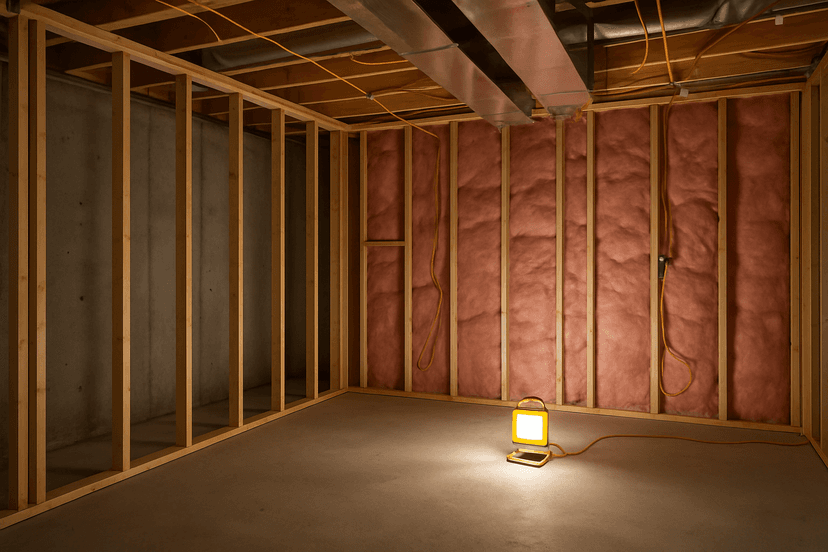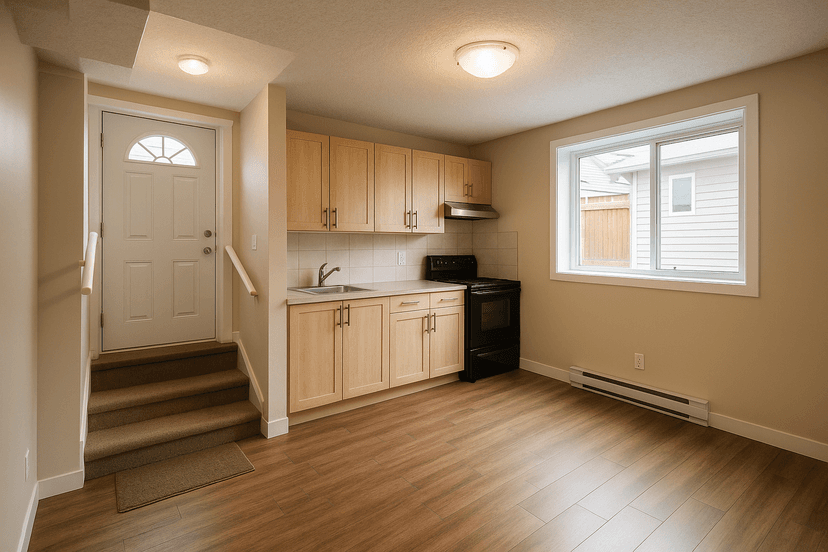

The Multigenerational Home Renovation Tax Credit refunds 14.5% of up to $50,000 in qualifying renovation costs, to a maximum of $7,250, for building a self-contained secondary unit so a senior aged 65 or over, or an adult eligible for the disability tax credit, can live with a qualifying relative in Canada.
Then a contractor offers to do the job for cash, no invoice, a few hundred dollars off the price. Accept that on a $50,000 secondary suite and you have traded $7,250 of a refundable federal credit for a small discount. The Canada Revenue Agency wants the contractor's business address, their GST/HST registration number where they have one, a description of the work, the address it was done at, the invoice amount and proof of payment in full. A handshake in a driveway produces none of that. And the money does not come back around next year, because only one MHRTC claim exists for each qualifying individual, for their lifetime.
• The credit is 14.5% of your qualifying costs, capped at $50,000 of expenses, so the most one claim can pay out is $7,250.
• The credit is refundable, so the money arrives even if you owe no tax.
• The renovation has to create a self-contained secondary unit with its own private entrance, kitchen, bathroom and sleeping area.
• Someone in the household must be 65 or older at the end of the renovation period tax year, or aged 18 to 64 and eligible for the disability tax credit.
• Only one renovation can be claimed for a qualifying individual during their lifetime.
• Expenses with no receipt do not qualify, so the contractor you pick decides whether the claim survives.
What is the Multigenerational Home Renovation Tax Credit in Canada?
The Multigenerational Home Renovation Tax Credit, shortened to MHRTC, is a refundable federal tax credit claimed on a Canadian income tax and benefit return. The Canada Revenue Agency describes the credit as covering "certain renovation expenses to create a self-contained secondary unit", and states that "the secondary unit must allow a senior or an adult who is eligible for the disability tax credit to live with a qualifying relative". For 2024 and later tax years the claim goes on line 45355 of the return, with the expenses reported on Schedule 12.
The word refundable is the part that changes the arithmetic. A non-refundable credit only reduces tax you already owe. A refundable credit pays out the balance in cash: the Canada Revenue Agency's own worked example describes a claimant who owed $2,000 in tax, applied the maximum $7,250, and received a refund of $5,250.
How much is the MHRTC worth in Canada?
The table below sets out five of the statutory limits the Canada Revenue Agency publishes for the MHRTC, in Canadian dollars where a dollar figure applies, together with what each one restricts.
The Canada Revenue Agency publishes worked examples against those limits. In the first, a claimant with $70,000 of qualifying expenditures is capped at $50,000 and receives $7,250. In the second, a claimant with $30,000 of qualifying expenditures receives $4,350. Spending more than $50,000 on the suite does not raise the credit, and spending less than $50,000 does not forfeit it — the smaller number is simply the one that gets multiplied.
Who qualifies for the MHRTC in Canada?
Two different people have to qualify for an MHRTC claim to stand, and the Canada Revenue Agency defines them separately. One is the person the suite is built for. The other is the person who pays and claims.
The Canada Revenue Agency uses two words for the same idea — its main page says "qualifying relative" and its eligibility page defines the term "qualifying relation". A qualifying relation is 18 years of age or older at the end of the tax year, and is a parent, grandparent, child, grandchild, brother, sister, aunt, uncle, niece or nephew of the qualifying individual, or of that person's cohabiting spouse or common-law partner. An adult child building a suite for a parent aged 65 or over is the textbook case. A neighbour, a family friend and a tenant are not on the Canada Revenue Agency's list.
Can two people split an MHRTC claim in Canada?
Two or more people who share the cost of the same qualifying renovation can split the credit between them, which is the ordinary case when several adult children contribute to a parent's suite. The Canada Revenue Agency sets three conditions on a split: each person claiming is an eligible individual, each claims only the qualifying expenditures they actually incurred, and the total claimed between them is not more than the maximum.
The ceiling does not multiply with the number of claimants. Where renovation costs have been shared, the Canada Revenue Agency states that more than one eligible individual can each make a claim for the same renovation "up to a combined total of $50,000". Two siblings who spend $62,000 between them are still working against one $50,000 cap and have to agree how it is divided.
What counts as a self-contained secondary unit under the MHRTC?
A finished basement is not automatically a secondary unit, and the gap between the two is where MHRTC claims die. The Canada Revenue Agency sets three conditions, and a Canadian renovation has to satisfy all three.
✅ Is a self-contained housing unit with a private entrance, kitchen, bathroom and sleeping area.
✅ Is newly constructed, or created from an existing living space that did not already meet local requirements to be considered a secondary dwelling unit.
✅ Meets applicable local requirements, permits, codes and by-laws.
Read the third condition twice, because compliance with local by-laws is a condition of the federal credit, not a separate municipal headache. A suite that never got a permit, or that fails its inspection, is a suite the Canada Revenue Agency has grounds to refuse. Second-unit rules on ceiling height, egress windows, fire separation and parking are set municipally, so the permit file for the job is also the evidence file for the claim.
Which renovation expenses qualify for the MHRTC in Canada?
A qualifying expenditure has to satisfy three tests at once, on the Canada Revenue Agency's own wording: a reasonable expense directly attributable to the qualifying renovation, made or incurred after December 31, 2023 and before the end of the renovation period, and made or incurred by an eligible individual.
Inside those tests, a qualifying expenditure may include goods acquired or services received, "including work performed by professionals (such as electricians, plumbers, carpenters or architects)". Homeowners doing the work themselves can claim building materials, fixtures, equipment rentals, building plans and permits — but not, on the Canada Revenue Agency's wording, "the value of your labour or tools". The Canada Revenue Agency names those trades explicitly, so the labour is claimable — provided it arrives on a proper invoice.
Which expenses do not qualify for the MHRTC?
The Canada Revenue Agency publishes its own set of expenses that do not qualify for the MHRTC, reproduced here in full from the Canada Revenue Agency's published list, in its order.
• Annual, recurring or routine repair or maintenance.
• Household appliances.
• Electronic home-entertainment devices.
• Housekeeping, security monitoring, gardening, outdoor maintenance or similar services.
• Financing costs for the qualifying renovation.
• Goods or services provided by a person not dealing at arm's length with the individual, unless that person is registered for GST/HST under the Excise Tax Act.
• Expenses that can reasonably be considered to have been reimbursed.
• Expenses not supported by receipts.
• Expenses already claimed under the medical expense tax credit or the home accessibility tax credit, or both.
Two of those exclusions catch ordinary Canadian families rather than aggressive ones. A brother-in-law who frames the suite at a family rate is a person not dealing at arm's length, and the labour is excluded unless he is GST/HST registered. And a rebate or any other assistance received has to be netted off first: the Canada Revenue Agency states that MHRTC expenses "must be reduced by any expenses that can reasonably be considered to have been reimbursed", including related GST/HST rebates.
When do you claim the MHRTC, and when does the renovation period end?
The MHRTC is claimed in the tax year when the renovation period ended, even if the renovation took more than one year. The renovation period begins when the first qualifying expenditure is made or incurred — the Canada Revenue Agency gives applying for a building permit as its example — and ends when the qualifying renovation is completed, with passing the final inspection given as its example of completion.
The consequence for a Canadian homeowner is blunt: the date your contractor books the final inspection decides which tax year the $7,250 lands in. The Canada Revenue Agency's published example follows a claimant whose first expense fell in April 2025 and whose renovation passed final inspection in July 2026; the claim belongs to the 2026 return, not the 2025 one. A suite finished in the last weeks of December and a suite inspected in the first week of January are separated by a full year of waiting for the refund.
What paperwork does the CRA require from your contractor?
Supporting documents for an MHRTC claim have to clearly identify the type and number of goods bought or services provided. The Canada Revenue Agency publishes its own checklist of what those documents have to show, and a Canadian homeowner is better off handing that checklist to a contractor before the deposit than after the final payment.
• Information that clearly identifies the vendor or contractor, their business address and their GST/HST registration number, if any.
• A description of the goods and the date they were bought.
• The date the goods were delivered, or the work or services performed, or both.
• A description of the work done, including the address.
• The amount of the invoice.
• Proof of payment — receipts or invoices showing payment in full, or other proof such as a credit card slip or cancelled cheque.
A GST/HST registration number can be checked against the Canada Revenue Agency's GST/HST Registry before any money moves, which turns "are you registered?" from an awkward question into a thirty-second search.
Can you claim the MHRTC if you paid the contractor in cash?
Expenses not supported by receipts do not qualify for the MHRTC, on the Canada Revenue Agency's published exclusion list, so a cash job with no paperwork is not claimable however real the work was. Paying by cash is not itself fatal — the requirement is documentary, and proof of payment can be a receipt or invoice showing payment in full. What kills the claim is the absence of an invoice naming the contractor, their business address and the work done at your address.
Set the arithmetic beside the discount. A cash offer that saves a few hundred dollars on a $50,000 suite puts $7,250 of refundable credit at risk, and no second claim exists for that qualifying individual afterwards. The cheaper quote is the more expensive one.
How do you find a contractor in Canada who will invoice properly?
Ask the paperwork question first, before the price question. A contractor who will put their business address and, where they have one, their GST/HST number on an invoice, describe the work and the address on it, and pull the building permit in their own name is the contractor whose quote is worth $7,250 more than an identical number from someone who will not. Ask it on the first call and the field narrows fast.
A lead-selling directory makes its money by selling your secondary-suite enquiry to trades as a lead, and a trade who pays for that lead prices the fee back into the quote you receive. You pay for the privilege of being sold. TaskRight does not work that way: pros pay a flat subscription, keep 100% of every job, and there is no per-lead fee to bake into your number.
TaskRight is a verified, zero-commission home services platform in Canada. Post your secondary-suite job once — say whether it is a basement conversion or a new build, and which municipality you are in — and read the quotes that come back in writing, with the invoice question answered before you commit. Pros keep 100% of every job and pay no per-lead fee, so nothing is priced back into your number.
👉 Get quotes from contractors who invoice properly →
Frequently asked questions about the Multigenerational Home Renovation Tax Credit
How much is the Multigenerational Home Renovation Tax Credit worth in Canada?
The MHRTC is 14.5% of qualifying renovation costs in Canada, on up to $50,000 of expenditures for one qualifying renovation, giving a maximum credit of $7,250. The credit is refundable, so the Canada Revenue Agency pays out the balance in cash even when the claimant owes no tax for the year.
Who counts as a qualifying individual for the MHRTC in Canada?
A qualifying individual for the MHRTC is either 65 years of age or older at the end of the renovation period tax year, or 18 to 64 years of age and eligible for the disability tax credit at any time in that year. The suite has to let that person live with a qualifying relative.
Does a finished basement qualify for the MHRTC in Canada?
A finished basement qualifies for the MHRTC only where the work creates a self-contained unit with a private entrance, kitchen, bathroom and sleeping area, and meets applicable local requirements, permits, codes and by-laws. A basement rec room with no kitchen or separate entrance is not a secondary unit under the Canada Revenue Agency's definition.
Can you claim the MHRTC more than once in Canada?
Only one renovation can be claimed for a qualifying individual during their lifetime, so a household cannot claim the MHRTC twice for the same senior or disability-tax-credit-eligible adult. Two qualifying renovations completed for two different qualifying individuals in the same year can each be claimed, calculated separately up to $50,000 of expenses apiece.
Which MHRTC expenses does the Canada Revenue Agency refuse?
The Canada Revenue Agency excludes routine repair and maintenance, household appliances, home-entertainment devices, housekeeping and outdoor maintenance services, financing costs, reimbursed expenses and expenses not supported by receipts. Work by a person not dealing at arm's length is also excluded, unless that person is registered for GST/HST under the Excise Tax Act.
Which line and schedule do you use to claim the MHRTC in Canada?
For 2024 and later tax years the MHRTC is claimed on line 45355 of the income tax and benefit return, with expenses reported on Schedule 12. The claim belongs to the tax year in which the renovation period ended, even where the secondary-suite build ran across more than one calendar year.
Last updated: September 2026. MHRTC figures on this page are taken from the Canada Revenue Agency's line 45355 pages, last modified 2026-01-20, and are re-checked against those pages every six months.
Related reading:
Basement Waterproofing Cost in Canada — the work that comes before the framing on a wet basement.
Renovation contractors in Canada — post your job with no lead fees.